What Truck Bed Configurations Work Best for Contractors in Denver, CO?
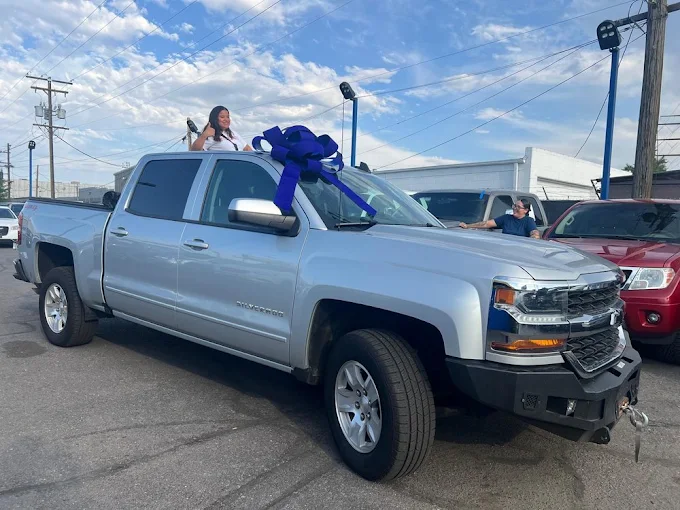
An eight foot sheet of plywood will not fit in a five and a half foot bed with the tailgate up, and honestly, that one fact settles more work truck decisions than horsepower ever will. We stock work trucks as a car dealership in Denver, CO, each one inspected mechanically and for safety before it ever gets listed.
We walk buyers through bed length before anything else, because that's usually where people get surprised. Cab size and bed length trade against each other on nearly every truck built. It's just how these things are built, really.
Every configuration is a compromise between what you carry and who rides with you, and that's kind of the whole game here. Naming the compromise up front is faster than discovering it on a Monday morning, especially when you're working with a quality auto dealer like us who's seen every combination roll through the lot.
Cab Size Is What Really Sets Your Bed Length
Manufacturers pair cab configurations with bed lengths, and the wheelbase absorbs the difference. A crew cab with four full doors takes interior space from somewhere, and that somewhere is always the bed. An extended cab gives back roughly a foot of bed while keeping a usable rear seat for tools and a jacket.
Regular cabs pair with the longest beds and the shortest total length, which is why fleet trucks so often look that way. The catch is that two people fill the cab. There is nowhere dry to put a laptop, a binder, or a tool bag.
Decide whether you carry crew daily or occasionally, because that answer sets the cab, and the cab sets the bed, something you can see pretty clearly once you start browsing our full lineup of used trucks.
The Three Common Bed Lengths and What Each One Holds
Short beds near five and a half feet handle tool boxes, buckets, and bagged material without trouble. Ladders ride on a rack instead. Short beds park in Denver's older neighborhoods and in a parking garage, which matters a great deal for downtown service work. Long sheet goods need the tailgate down and a flag.
Standard beds near six and a half feet are the common middle ground. Sheet goods overhang slightly with the tailgate up, though a bed extender closes that gap cheaply. Eight-foot beds take full sheets and full lengths of pipe flat with the tailgate closed.
Trim carpenters and mechanical contractors keep buying them for that reason, and it's worth working through the important questions to ask before you buy, before you commit to that extra length. The cost is a turning radius and a truck that will not fit a standard garage.
| Bed length | Handles well | Struggles with | Common cab pairing |
|---|---|---|---|
| 5.5 feet | Tool boxes, buckets, bagged material | Sheet goods, long pipe, conduit | Crew cab |
| 6.5 feet | Most trade loads, short lumber | Full sheets with tailgate up | Crew or extended cab |
| 8 feet | Full sheets, full-length pipe, pallets | City parking, tight job sites | Regular or extended cab |
Measure before you shop. Write down your longest regular item along with your heaviest single load. Bring both numbers to the lot, and our team will rule out half the inventory in two minutes.
Hauling something awkward this week, or just not sure your current setup can handle it? Give us a call at (303) 639-9283, and we'll help you figure out which bed actually fits the job.
Bed Liners, Toolboxes and What They Cost You
A spray-in liner protects the bed floor from gouging when you drop steel or stone. It also avoids trapping moisture the way a drop-in liner can. Drop-in liners sit loose in the bed and collect road salt underneath them.
Colorado road treatment chemicals will work on the metal beneath them through a winter. Lift the edge of any drop-in liner and look at what is under it.
A crossover toolbox behind the cab takes roughly eight to twelve inches of bed length. On a short bed, that is a meaningful share of what you had. Factor the box into the length decision rather than treating it as a later accessory.
Weight matters too, by the way. A loaded steel box sits high and reduces the payload left for everything else.
Work through these before you settle on a configuration.
- Your longest regular item, measured rather than estimated
- Whether a toolbox is going in, and how much bed it will take
- Your heaviest single load, checked against the door jamb payload figure
- Trailer tongue weight, if you tow, since it counts against payload
- The tightest site you work at, and whether an eight-foot bed fits it
The rest of the walkaround comes down to the usual checks, the kind covered by what to inspect before buying a used truck, things like frame rust, tire wear, and how the suspension sits under a load.
Payload, Towing and the Numbers on the Door Jamb
Bed size does not determine how much weight the truck can carry. A long bed on a half-ton can run out of payload before a short bed on a three-quarter-ton. Payload follows suspension, axle, and frame rather than square footage. The door jamb sticker on the individual truck states the real figure for that build.
Towing adds another layer, because tongue weight from a loaded trailer counts against payload. A truck that looked fine loaded with tools can sit over its limit once the trailer is hitched. If you tow over Floyd Hill or up US 285, plan around both numbers together.
Our sales team pulls the sticker and the CARFAX on any truck before the test drive. It's worth asking plenty of questions before you buy, honestly, same as you would with anything this expensive.
Matching a Bed to Denver Job Sites
Site access decides more than buyers expect. A residential remodel in Wash Park or Baker means an alley, a narrow driveway, and street parking that needs a permit. An eight-foot bed turns every one of those into a chore. Commercial sites in Aurora or Commerce City have room, so the long bed costs you nothing there.
If your work splits between both, most contractors land on a six and a half foot bed with a crew cab. A bed extender handles the occasional long load. Plenty of options on the lot cover that middle ground pretty well. Select trucks carry a free 3-month or 3,000-mile certified warranty backed by AVP.
Coverage includes engine internals, the transmission and transfer case, the drive axle, the electrical system, air conditioning, and seals and gaskets. It applies to qualifying vehicles, so confirm it on your truck.
Come measure a few beds in person, bring a tape and your longest item, and we'll help you settle it on the spot.
Have more questions about which cab and bed combo fits your work, or just want to see what's on the lot? Contact us, and we'll walk you through it. You can also call us at (303) 639-9283 or stop by 1262 West Alameda Avenue, Denver, CO 80223. We're open Monday through Friday, 9:00 AM to 8:00 PM, and Saturday 9:00 AM to 7:00 PM.
Related Topics: